Before work begins
What can affect the job.
Standing water, erosion, and washouts can have different sources, so the visible wet spot is not always where the correction should begin.
Drainage services
Property drainage evaluation, trenching, French drains, grading, and runoff management across GradeCraft's New Jersey service area.
Before work begins
Standing water, erosion, and washouts can have different sources, so the visible wet spot is not always where the correction should begin.
GradeCraft's approach
GradeCraft checks where the water comes from, how it travels, what it is damaging, and where it can drain before recommending the work.
Before work begins
Rutgers and USDA guidance show that ponding can result from several conditions, including compaction, surface grade, and subsurface water. A French drain can collect and convey excess water when the soil, route, and outlet support it, but it is not a universal fix for every wet property.
The right scope still depends on site conditions, utility requirements, drainage outlets, permits, and how the area will be used.
What may be included
Each estimate identifies the excavation work and notes any design, permits, locating, testing, licensed trade work, or finish work that must be handled separately.
Related GradeCraft project
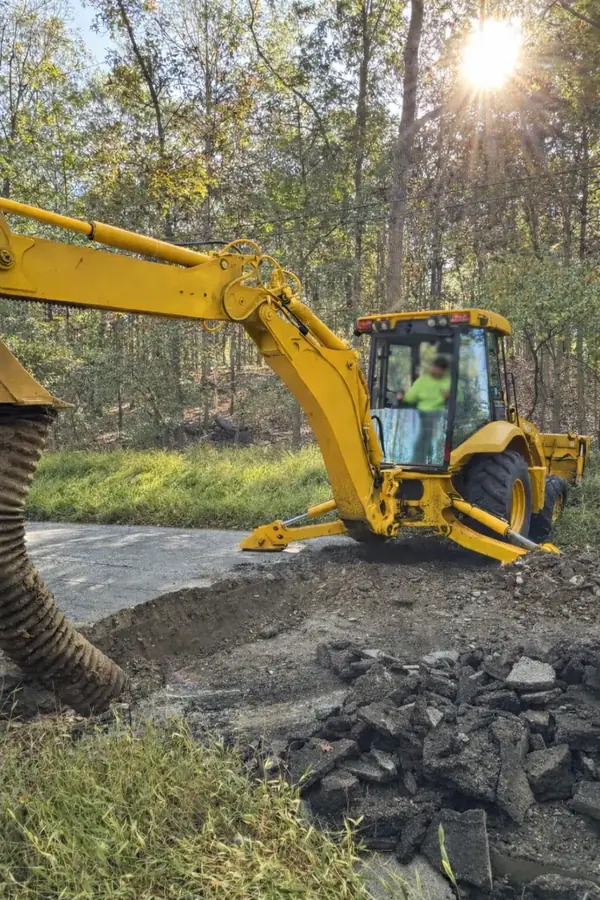
A backhoe excavating for drainage beside existing pavement in Warren County.
The paved work area affected equipment access and restoration planning. The customer's name and exact location are kept private.
View project detailsCommon questions
No. The cause may be surface grading, roof runoff, a blocked outlet, groundwater, soil, or another condition. The water source and a suitable discharge point should be understood before selecting the correction.
Photograph the area during or immediately after the conditions that create the problem. Include where water enters, where it collects, the surrounding grades, nearby structures, and any visible outlet.
Services and locations
See where GradeCraft handles this type of work.
Services and locations
Request an estimate
Send the town or city, approximate size, site access, and a short description of what you need done.