Before work begins
What can affect the job.
Depth, route, existing utilities, spoil placement, bedding, inspection, and surface restoration all influence a trenching project.
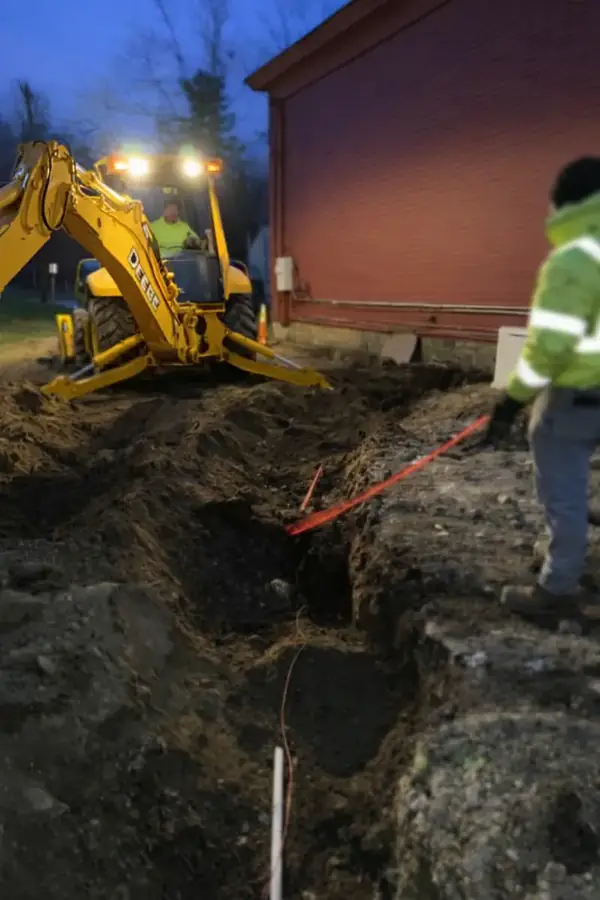
Trenching services
Controlled trench excavation for drainage, conduit, water, and site utilities, coordinated around access and restoration.
Before work begins
Depth, route, existing utilities, spoil placement, bedding, inspection, and surface restoration all influence a trenching project.
GradeCraft's approach
GradeCraft coordinates trench excavation with the route, depth, installation requirements, backfill, and surface restoration.
Before work begins
New Jersey's safe-digging guidance requires an 811 markout request at least three business days before excavation. The trench also has to match the installation requirements for depth, separation, bedding, inspection, backfill, and surface restoration.
The right scope still depends on site conditions, utility requirements, drainage outlets, permits, and how the area will be used.
What may be included
Each estimate identifies the excavation work and notes any design, permits, locating, testing, licensed trade work, or finish work that must be handled separately.
Common questions
Confirm the route and installation requirements, arrange required public mark-outs, identify private utilities or systems, resolve permits and inspections, and plan access, spoil, bedding, backfill, and restoration.
Public mark-outs generally cover participating facility owners' lines, not every private or owner-installed utility. Private locating may be needed for septic, well, electric, irrigation, lighting, or other private systems.
Services and locations
See where GradeCraft handles this type of work.
Services and locations
Request an estimate
Send the town or city, approximate size, site access, and a short description of what you need done.