
Before work begins
What can affect the job.
Ruts, soft areas, and washouts often return when only the surface is covered and the water or weak base remains.
Driveway Grading services
Driveway grading, base preparation, drainage correction, and private access improvements for New Jersey properties.
Before work begins
Ruts, soft areas, and washouts often return when only the surface is covered and the water or weak base remains.
GradeCraft's approach
GradeCraft checks runoff, crown or cross-slope, outlets, subgrade, existing stone, and normal traffic before recommending a repair.
Before work begins
Federal Highway Administration guidance emphasizes crown, drainage, material gradation, and a stable, compacted base for unpaved roads. Repeatedly adding surface stone may hide a soft or wet layer without correcting the cause of recurring ruts and potholes.
The right scope still depends on site conditions, utility requirements, drainage outlets, permits, and how the area will be used.
What may be included
Each estimate identifies the excavation work and notes any design, permits, locating, testing, licensed trade work, or finish work that must be handled separately.
Related GradeCraft project
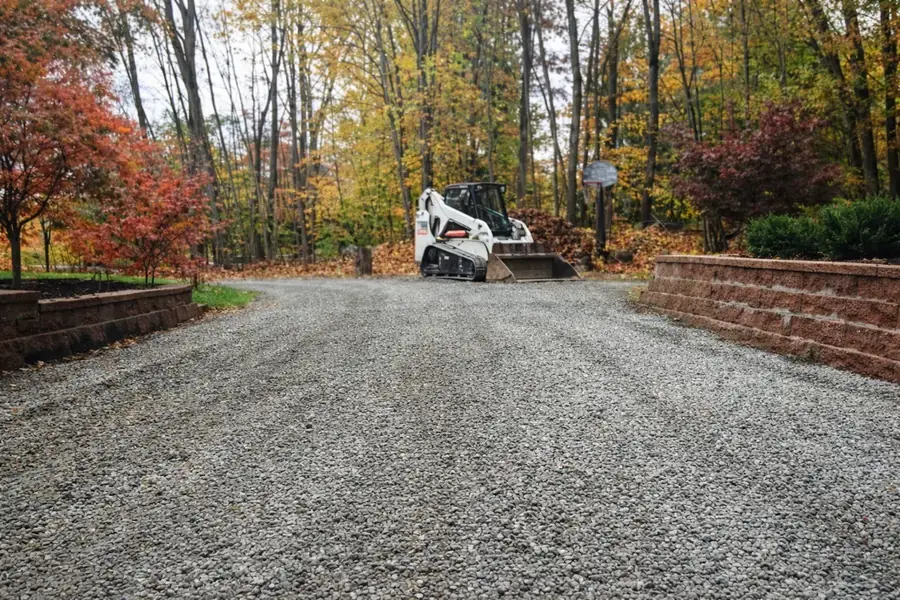
A compact track loader grading a prepared gravel driveway in northwest New Jersey.
This photo shows GradeCraft grading work on a gravel driveway in northwest New Jersey. The customer's name and street address are kept private.
View project detailsCommon questions
Common causes include uncontrolled runoff, inadequate crown or cross-slope, weak subgrade, thin or contaminated base, poor outlets, and traffic that exceeds the existing section.
Sometimes, if enough suitable material remains and the base is stable. Other drives need added aggregate, soft-area repair, drainage work, or partial reconstruction. A site review determines which condition applies.
Services and locations
See where GradeCraft handles this type of work.
Services and locations
Request an estimate
Send the town or city, approximate size, site access, and a short description of what you need done.